

As governments prepare their fiscal frameworks for 2026, several countries are making significant adjustments to their VAT systems. These measures reflect a mix of economic priorities, from incentivizing sustainable consumption to narrowing tax gaps, easing inflationary pressures, and modernizing sector-specific taxation.
For businesses operating across EU markets, understanding these upcoming changes is essential for pricing strategies, compliance planning, and forecasting. Below is a consolidated overview of the major VAT rate revisions and tax measures set to take effect in 2026.
Major Themes Emerging Across the EU
- Across the board, a few trends are becoming increasingly evident:
Rebalancing of reduced rates — Several countries (e.g., the Netherlands, Finland) are streamlining reduced VAT rates, often narrowing exemptions. - Targeted support for essential goods — Cyprus, Latvia, and Sweden are extending or introducing reduced rates for food, medicines, and other essentials.
- Sector-specific adjustments — Hospitality, accommodation, culture, and mobility services are among the most impacted sectors.
- Environmental and health-driven taxation — Slovakia’s increase on high-sugar/salt foods and Belgium’s rate hike on pesticides highlight Europe’s continued policy shift toward healthier and more sustainable consumption.
- Vehicle-related VAT limitations — Slovakia and Croatia continue to restrict input VAT deduction on non-business vehicle use — a key area for multinational and service-based companies.
Detailed Overview of 2026 VAT Changes
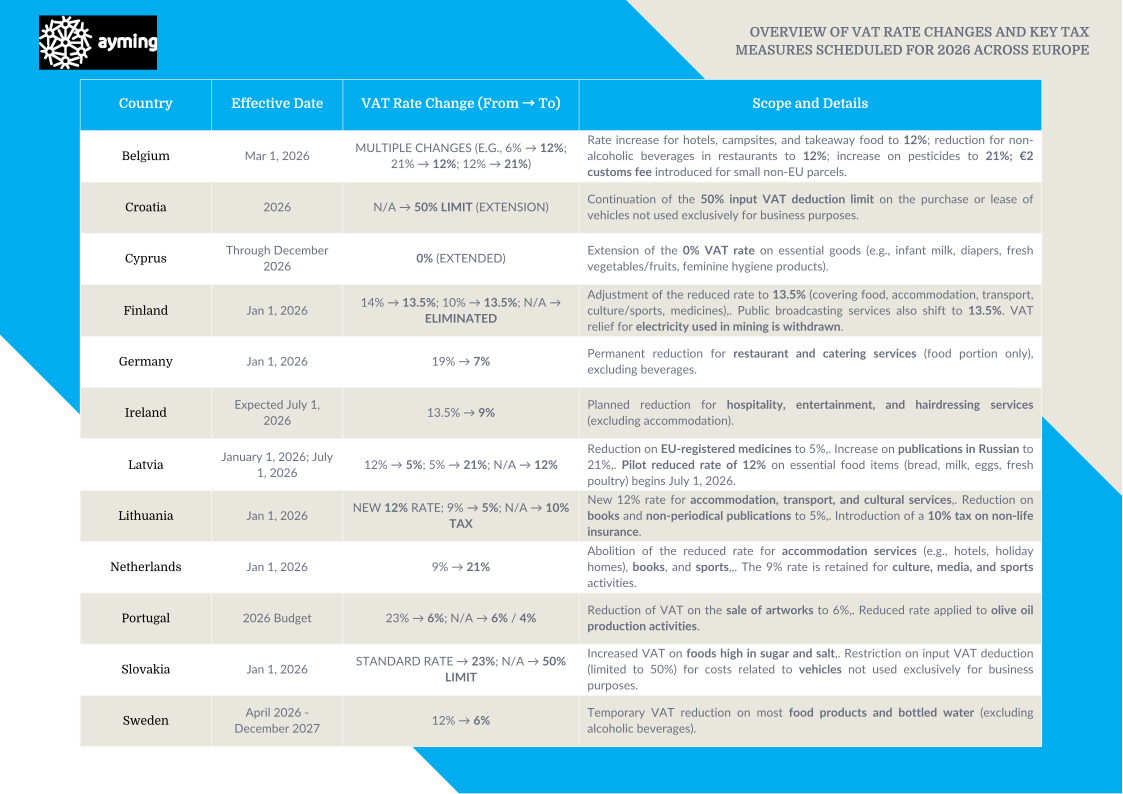
This table summarizes the key VAT movements, including the effective dates, rate changes, and the specific sectors affected.
Why These Changes Matter for Businesses
Understanding these shifts early can help organizations prepare for potential impacts on:
1. Pricing & Cost Structure
Changes such as the Netherlands’ increased rate on accommodation (9% → 21%) or Belgium’s new 12% rate on takeaway food can significantly impact cost models and margins.
2. Supply Chain and Contract Updates
With new limits on vehicle-related VAT deduction (e.g., Slovakia and Croatia), companies may need to reassess fleet strategies and leasing arrangements.
3. Industry-Specific Strategy
Sectors like hospitality, culture, publications, and food production will experience some of the most notable rate transitions — ranging from rate increases to temporary reductions.
4. Cross-Border Complexity
- Multinational companies operating across Europe should pay special attention to:
varying implementation timelines (e.g., Latvia’s two-phase changes), - temporary versus permanent measures (e.g., Sweden’s food VAT reduction until 2027),
- sector-specific exceptions (e.g., Ireland’s exclusion of accommodation from its planned 9% rate).
Next Steps for Businesses and Tax Teams
- With 2026 approaching, organizations should consider:
Conducting a VAT impact assessment across all affected jurisdictions. - Reviewing ERP and billing systems to ensure rate updates are implemented accurately.
- Revisiting pricing strategies in sectors facing substantial increases.
- Communicating changes proactively to customers and partners.
- Monitoring legislative updates, as some measures (such as Ireland’s) remain proposals pending final approval.
The 2026 VAT changes reflect a dynamic and evolving European fiscal landscape. Whether your organization operates in hospitality, retail, transport, or services, preparing early will be essential to ensure compliance and avoid costly surprises.
If you need support assessing how these changes could impact your operations, pricing, or reporting processes, our team is here to help.
VAT Refund opportunities for non-resident businesses in 2026
Beyond VAT rate changes, 2026 also presents important opportunities for businesses to recover VAT incurred abroad. Companies that are not established in a particular country but incur local VAT on expenses such as travel, accommodation, events, fuel, or tooling may be eligible to claim refunds under domestic refund schemes or EU Directive procedures.
Understanding where VAT is recoverable, partially recoverable, or non-deductible can have a meaningful impact on cash flow, especially for organizations with frequent cross-border activity.
To support this analysis, the table below provides a country-by-country overview of VAT refund rules for non-resident businesses, including:
-
Applicable VAT currency
-
Deadline for claim submission
-
Refund eligibility by expense category (e.g., accommodation, restaurants, events, exhibitions, training, tooling, representation office costs, car rental, passenger transport, fuel, and other expenses)
-
Notes on restrictions, non-deductible VAT, and special conditions
This overview covers both EU and selected non-EU jurisdictions, enabling businesses to quickly identify where refund claims may be worthwhile and where limitations apply.
How to Use This Table
Businesses can use this information to:
-
Prioritize refund claims in countries with high recovery potential
-
Budget more accurately for non-recoverable VAT
-
Design travel and procurement policies that maximize VAT recovery
-
Identify jurisdictions where VAT registration (rather than refund claims) may be required to recover tax
Given the complexity and frequent legislative updates in this area, refund eligibility should always be reviewed alongside local rules, documentation requirements, and reciprocity conditions.
Strategic Considerations
When combined with the 2026 VAT rate changes outlined earlier in this article, VAT refund planning becomes even more important:
-
Higher VAT rates increase the value of recoverable VAT
-
Changes to reduced or standard rates can alter the financial impact of non-recoverable expenses
-
Inconsistent treatment across countries adds administrative and compliance risk
Proactive VAT recovery management can therefore serve as both a cost-control measure and a compliance safeguard.
If your organization would like support assessing refund eligibility, preparing claims, or designing a VAT recovery strategy aligned with your 2026 business activities, our specialists are ready to assist.